KRAAK FEST 2026 HIGHLIGHTS: Miradasvacas
Pablo Mirón and Juan Vacas of Miradasvacas make music suitable for something like a deranged road movie or for brushing your horse’s manes. Melancholic harmonica, violin, field recordings, guitar, crackling noise, stuff moving around… Just when you thought things lasted forever, tapes start falling apart in the saddest way possible. We got to talking with this hyperactive madrileño duo about their history and multifarious projects that find them entangled again and again.
Tell us about your background. How did you meet and how did you start making music together?
We met around 2016. Pablo went to school with Sefa — a close friend and founder of Real No Real — who used to meet regularly with Juan in a house in the mountains outside Madrid. They would spend time there listening to records and tapes. Sefa invited Pablo to one of those gatherings, and that’s how we met. We became friends pretty quickly.
A year later, in 2017, we started Real No Real — initially as a way to bring independent artists working in experimental music to play in Madrid. In 2021 we organized a four-day concert series with eight artists. We had run out of money to invite anyone else, so we decided to play ourselves.
We started simply — tapes, a few instruments we had around (Casio, harmonica, guitar, violin), and field recordings we’d been collecting over time. While preparing for that concert, we recorded everything that was going out from the speakers on a Zoom H1 taped to a mic stand. That material eventually became Of No Fixed Abode, released on 12th Isle in 2023.
Same-ish question, but what about your label Ediciones Fontenebro: when and how did that come into existence?
We’ve always been drawn to music in physical formats — especially tape culture from the 80s, private pressings, mail art, and the kind of networks that existed around that time. Over time, we started reaching out to artists and small publishers, building correspondence and relationships with them.
At some point, the idea of starting a label naturally came up — as a way to work with unreleased material we were discovering through those exchanges.
The first release happened in 2021, after we invited Fredi Alberti to play at Real No Real in Madrid. We ended up working together on publishing a recording of an improvisation he did in 1983 with Ingo Werner and Jo Kaufmann.
That experience opened a new process for us. We became interested not only in releasing the music, but in building a space around it — using the website as a way to share the context: letters, images, documents, all the material that usually stays hidden around these works.
After that, we continued with Pablo Giménez, an underground Spanish composer, from who we published his full tape discography as a 4-cassette set, and after that with Bernd Boehm — a German multidisciplinary artist — releasing a selection of experimental film soundtracks he made in the 80s, In each case, we try to expand the release beyond the audio itself, making visible everything that surrounds it.
Now we’re thinking of starting to open that approach to contemporary work as well.
In some way the label has naturally grown to encompass artists that work with sound but whose practice may go well beyond into other disciplines like film, sculpture, etc.

Apparently, your album En Perpetua emerged from the “newfound confidence in [your] process, and the endless possibilities from a new Madrid studio.” Can you fill us in on a typical day (if that exists) at your studio and on where this confidence comes from?
We usually gather in the studio when there’s a concert coming up. It’s rare that we meet to compose or to “officially record.”
When we get invited to play, we think about the context we will play in and we exchange ideas on processes we’d like to try, or outputs we’re curious about. From there, it’s mostly improvising and trying things out within the limits of our setup — and what we can carry as Ryanair hand luggage.
In terms of process, we’re just trying to satisfy curiosity, so there’s no fixed pattern. What tends to happen is that we gravitate more towards texture and layering than rhythm or melody. We also share field recordings we’ve each been collecting, or sounds we’ve come across — a bit like sharing music with close friends.
When we’re in the studio, we record everything from the speakers directly into the Zoom. Our albums come out of that material. That’s also why when we play live, we’re usually not playing the last record, but the next one — music that hasn’t been released yet, but maybe will at some point.
I guess the confidence comes from doing this over time and trusting it more. And also from accepting the limits of it. There’s much out of our control when we play.
Does your involvement in the non-profit arts organization Real No Real influence your own music? If so, how?
Maybe not directly after a performance, but I guess some of the artists we have invited had already influenced us in a way or another before having them in Real No Real. In the end, we program artists that we ourselves would like to see perform. On the other hand I guess that being exposed to so much music in a way inevitably permeates you.
What does endure at times and which may alter our understanding of things comes after sharing moments and conversations with artists about how we do things apart from the music. Certain approaches, attitudes, behaviors that go beyond our creative output, like the developments of networks and relationships which could at some point turn into something creative.
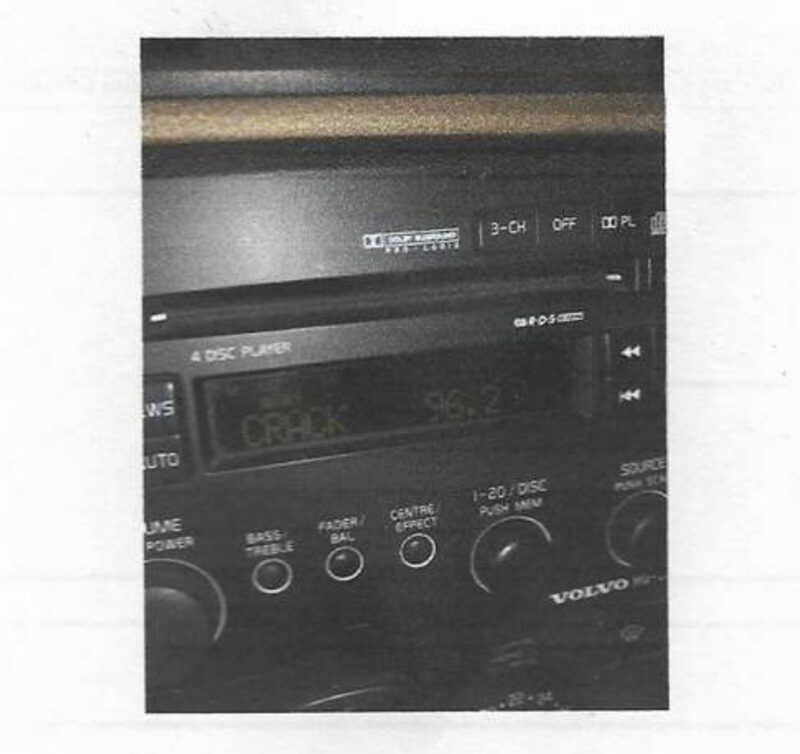
What type of music do you tend to listen to in the car — when you’re not recording a tape yourself like with “CRACK FM” (2023)?
Pablo — I mostly listen to internet radio shows. Lately I’ve been into Rắn Cạp Đuôi from Ho Chi Minh City and 626Company from Shanghai. Radio Relativa in Madrid — where I run a weekly program called Diving in Secrets — is always a big source of inspiration.
I keep coming back to this six-hour retransmission we did of a program called Re-flux, originally broadcast on Cambridge University’s student radio, Cam FM, in 2021. I’ve been in touch with the university to try to find the person who originally recorded this, but it remains a mystery.
Radijo Musikii — a 24/7 random iTunes stream from the archive of our friends at Braille Satellite, Óscar and Matas — is also one of my go-tos.
If I have no internet, I connect to Madrid’s latin-american radio La Suegra FM (98.6 FM) or Radio Clásica FM (88.2 FM ).
Juan — My car doesn't have bluetooth nor a way to connect a phone with a jack or cassette player so I mainly listen to Radio Clásica FM (88.2 FM ). It does have a CD player so I go for that even if I still don't have so many myself. A classic one that is always there is Roxy Music’s For Your Pleasure. Some more recent ones are Rory Salters On the floor by the door or Jacob Dwyer’s Toms House.
Miradasvacas::: Bandcamp // Real No Real // Ediciones Fontenebro // IG Juan + Pablo
Miradasvacas expand their sound adventures to our KRAAK Fest 2026, next Saturday 14 March at Het Bos, Antwerp ~ get your tickets here!